
What it is
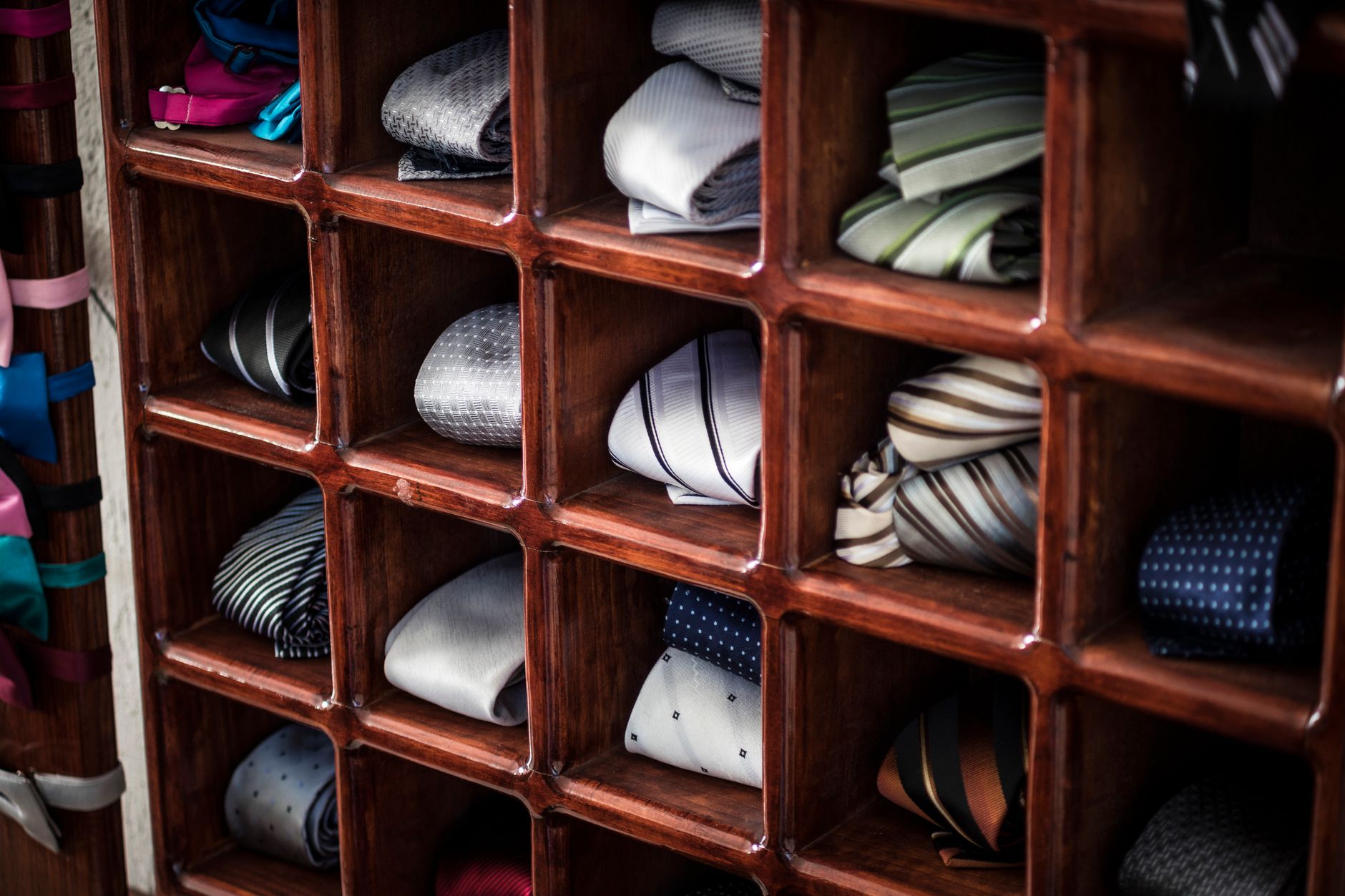
Belts, ties and small leather goods are where an outfit is finished or undone. The rules are simple and mostly about proportion and material honesty: tie width to lapel width, leather tone to shoes, hardware finish consistent.
What is included
- Proportion matched to the garments worn
- Leather and silk grade stated honestly
- Tone and hardware coordination
- Belt sized to measured waist
- Care advice for leather and silk
How it works
Proportion
We match tie and lapel width, and belt width to trouser loops, because mismatched proportion is what reads as wrong.
Material
We identify leather grade and silk quality plainly, and say when something is coated or bonded.
Coordination
We match leather tone across belt and shoes and keep buckle finish consistent with other metal worn.
Sizing
We size belts to the measured waist through the loops, not to the trouser label.
Frequent questions
How wide should a tie be?
Roughly the same width as the jacket lapel. That single rule solves most tie proportion questions.
Must belt and shoes match exactly?
They should be close in tone and finish rather than an exact match. Black with black, brown with brown; mixing the two is what looks careless.
How do I store ties?
Rolled or hung loose, never knotted overnight. Silk recovers from creasing if the knot is undone and the tie is rolled.
Related
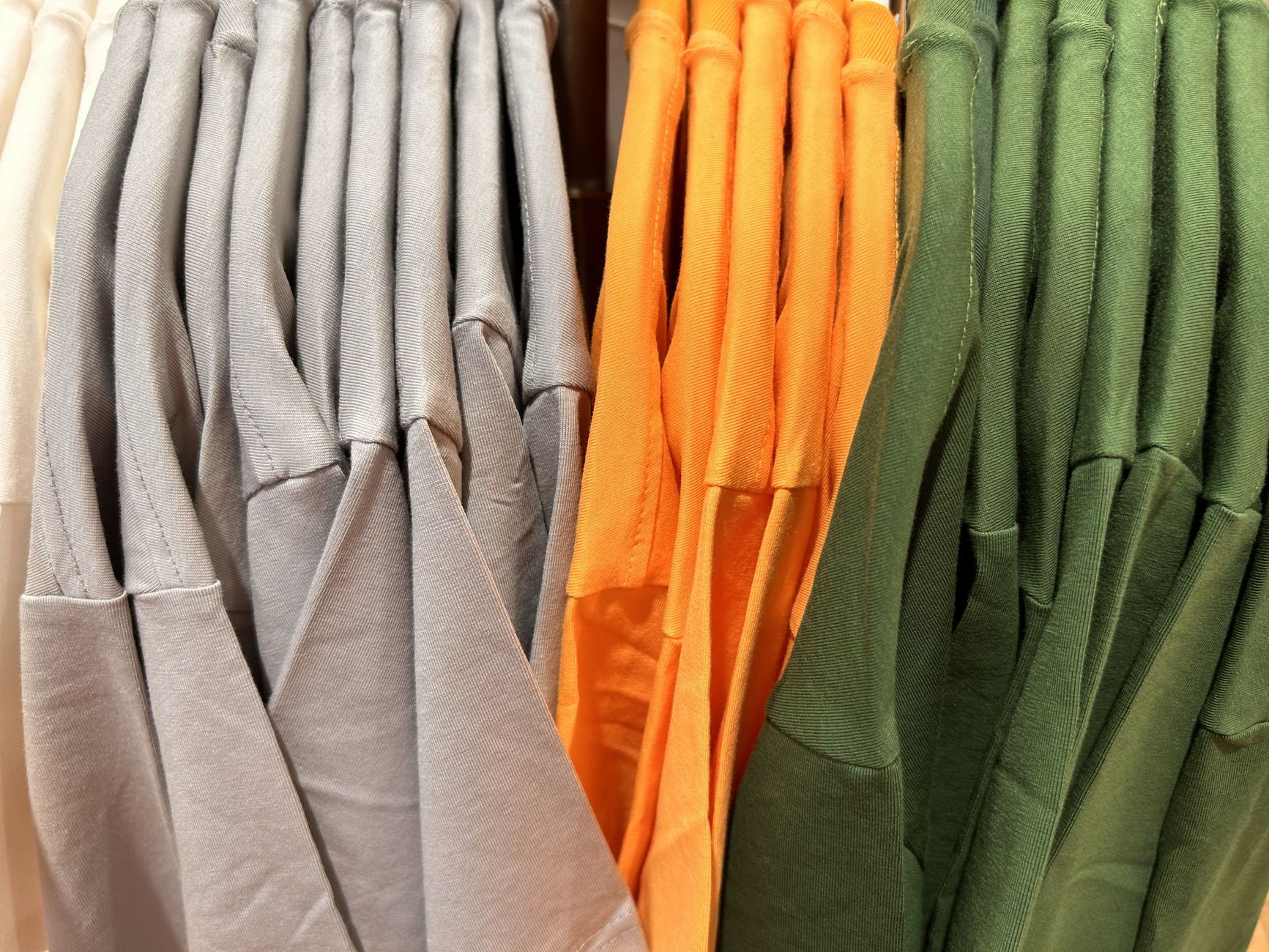
Fitted at four points
Shirts
Shirts measured at neck, chest, shoulder and sleeve, with body and sleeve alterations available.
Detail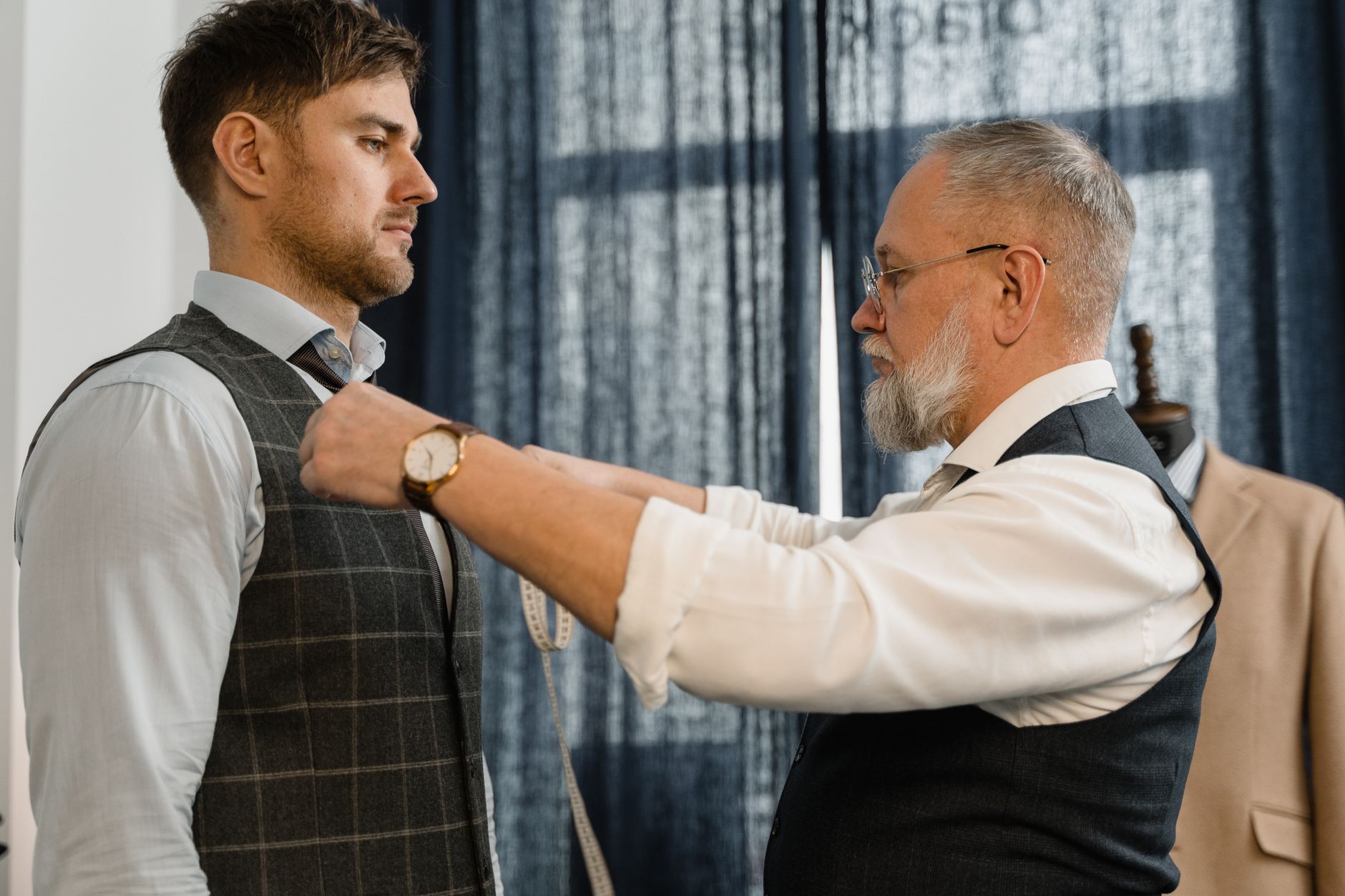
Two fittings, always
Suits and tailoring
Suits selected on shoulder and cut, then altered at sleeve, waist, seat and hem, with a second fitting.
Detail
Rise and break, decided
Trousers
Trousers worked through rise and leg shape, hemmed with the shoes that will be worn.
Detail