
What it is
Alterations turn a garment that nearly fits into one that does. Most of what separates expensive-looking clothing from the rest is a hem, a sleeve and a taken-in waist, none of which are expensive.
What is included
- Honest assessment of what is worth altering
- Pinning with correct shoes and layers
- Hem, sleeve, waist and seat work
- Original seam allowance preserved where possible
- Final fitting before collection
How it works
Assessment
We look at the garment on the body and say what can be altered well, what can be altered adequately, and what should not be attempted.
Pinning
We pin the alterations with the correct shoes and the correct layers on, since both change the result.
Alteration
We work to the pinned marks, keeping original seam allowance wherever possible for future changes.
Final fitting
We fit again before handover, and we adjust if anything moved.
Frequent questions
What cannot be altered?
Jacket shoulders and chest, realistically. Everything below and around them is straightforward. This is why fit at the shoulder decides the purchase.
How long do alterations take?
A hem is usually a few days; a full suit alteration with two fittings takes longer. We give you a date, not an estimate.
Do you alter garments bought elsewhere?
Yes. We will tell you first if the garment is not worth the work, rather than take the job and disappoint you.
Related
Fitted at four points
Shirts
Shirts measured at neck, chest, shoulder and sleeve, with body and sleeve alterations available.
Detail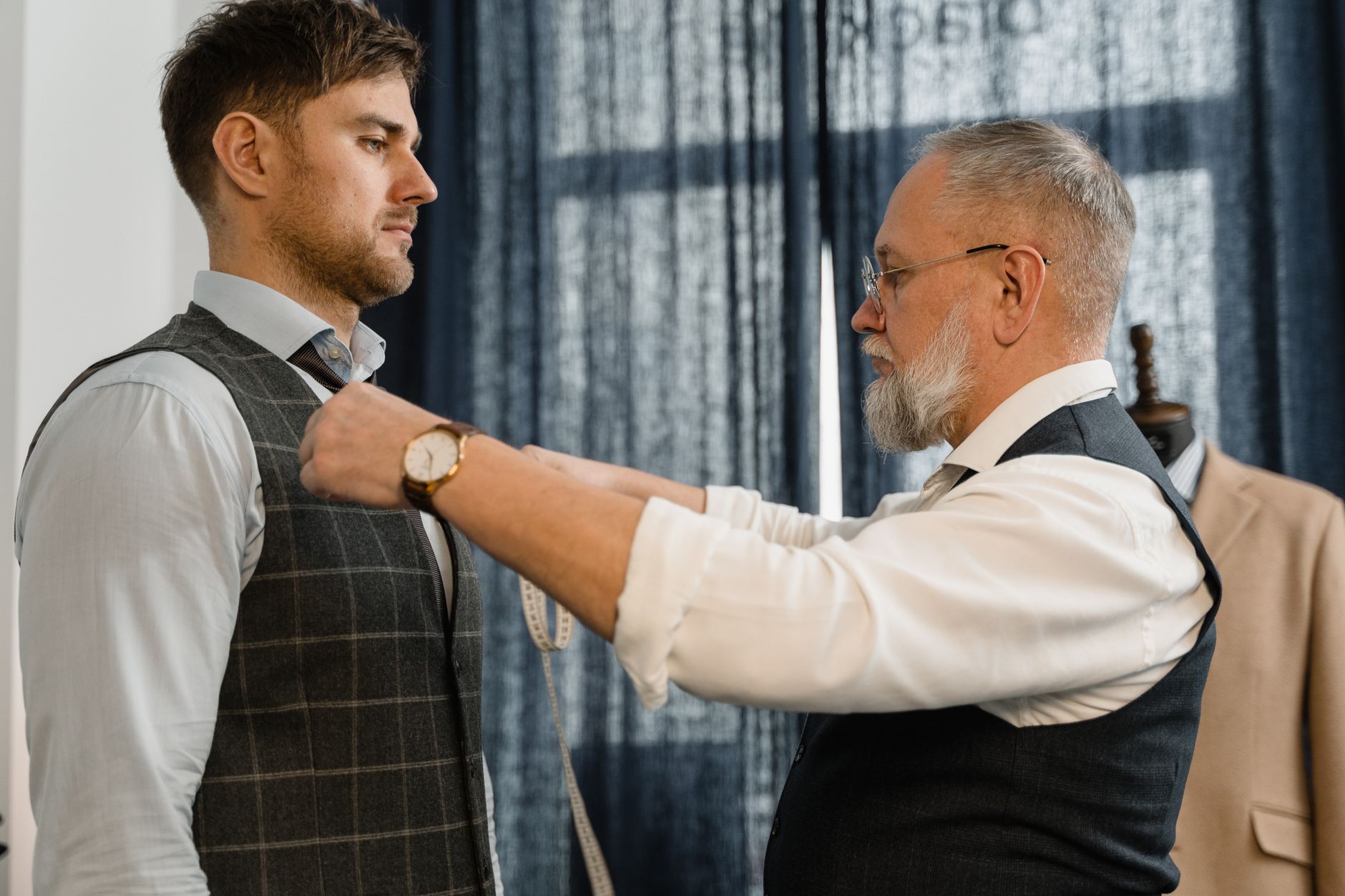
Two fittings, always
Suits and tailoring
Suits selected on shoulder and cut, then altered at sleeve, waist, seat and hem, with a second fitting.
Detail
Rise and break, decided
Trousers
Trousers worked through rise and leg shape, hemmed with the shoes that will be worn.
Detail